Reading room / Article
The 1960s Explained: Mod Fashion and Cultural Change
The 1960s combined civil rights and liberation movements, decolonisation, Cold War conflict, youth markets, new media, and changing technology. Mod was one British youth style among many—not a label for the entire decade. This guide explains the history before translating selected visual cues into an AI portrait option.
Dates and a genuinely global decade
The 1960s span 1960–1969. Decolonisation, the US civil rights movement, anti-war protest, second-wave feminism, student politics, migration, and popular music reshaped public culture in different ways. The Space Race and television made some events feel shared while inequality and violence remained stark.
London’s Mod scene influenced international fashion, but Paris, Milan, New York, Lagos, Kingston, Tokyo, São Paulo, and many local scenes had their own designers, music, and dress practices. Geography and access to imported media matter when identifying a look.
Mod clothing, hair, and alternatives
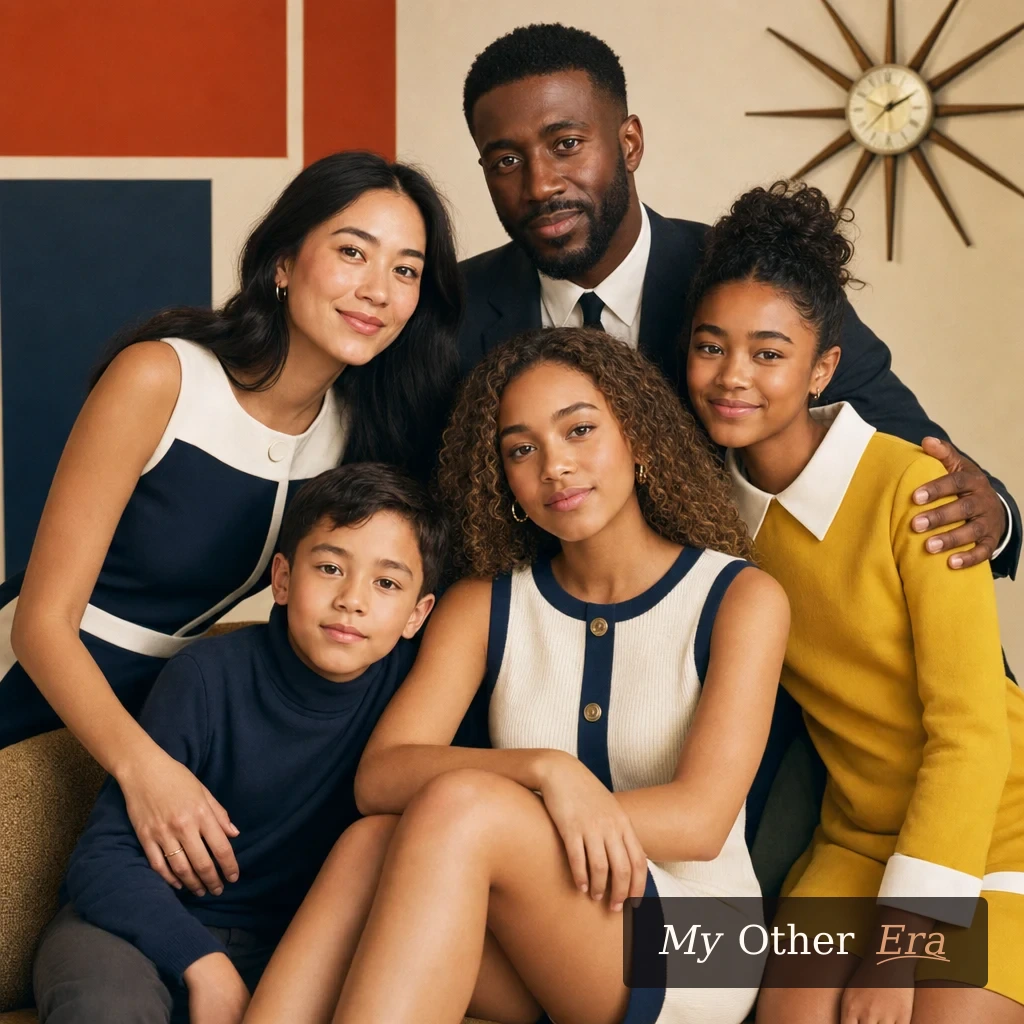
Mod fashion is associated with sharp tailoring, graphic colour blocks, mini skirts and dresses, flat shoes or boots, slim trousers, and clean geometric lines. Not everyone wore a mini; workwear, jeans, ethnic dress, formal clothes, hippie styles, uniforms, and conservative wardrobes were all present.
Geometric bobs, cropped cuts, eyeliner, strong lashes, and carefully shaped hair are familiar Mod cues. They were constructed looks requiring time, skill, and products, while natural textures and many other cultural hairstyles were equally contemporary. A decade cannot be reduced to one white London image.
Cameras, colour, and the public image
Colour magazines, television, fashion photography, photojournalism, and increasingly portable cameras made the 1960s look highly mediated. Studio photographers used bold backdrops, direct flash, and graphic crops; family snapshots captured school, travel, protest, and domestic life with less control.
Bright colour or hard flash can suggest the period but does not prove it. Check the print border, film or paper, photographer, clothing, setting, and provenance. Editorial photographs also reflect styling and publication choices rather than ordinary dress.
Context before nostalgia
The same years included anti-colonial struggle, the Vietnam War, nuclear anxiety, housing inequality, and discrimination. Youthful consumer style could coexist with exclusion and police violence. A useful article names those tensions instead of treating social change as a soundtrack for a shopping montage.
Museum fashion collections are strongest when paired with oral histories, protest archives, and local records. This prevents the British and American commercial image from becoming a false global default.
My Other Era’s Mod interpretation
The Mod option is a compact visual interpretation: graphic contrast, crisp lines, confident crop, and a 1960s-inspired hair or collar cue. It is not a recreation of a particular designer, subculture, protest, or city, and it does not infer a sitter’s politics or identity.
An original photo with a clear face and uncluttered shoulders works well for graphic composition. Keep the result labelled as AI-generated and avoid presenting it as a found 1960s photograph.
A bridge to the 1970s
Compare the shift with 1970s bohemian style and everyday life, or read 1960s Mod versus 1970s Bohemian for a side-by-side practical guide.
The studio’s era mapping is intentionally broad: it helps choose a creative direction while leaving the original person and their real story intact.
Try the studio
Try a Mod-inspired portrait
The treatment borrows selected Mod visual cues; it does not assign a subculture, politics, nationality, or identity.
Open the studioRelated reading
Sources and further reading
AI-assisted draft, fact-checked against the sources below and reviewed by the My Other Era editorial team. No individual reviewer is named because no individual reviewer is being claimed.