Reading room / Article
The 1970s Explained: Bohemian Style and Everyday Life
The 1970s were a decade of oil shocks, labour conflict, feminism, environmentalism, political violence, disco, punk, and changing media. “Bohemian” captures one creative and countercultural styling thread, not an entire decade or a universal attitude.
A decade of crisis and cultural invention
From 1970 to 1979, inflation, unemployment, the 1973 oil crisis, deindustrialisation, and political conflict affected households differently. Feminist, LGBTQ+, environmental, anti-war, and anti-colonial movements challenged institutions, while television and affordable consumer goods made styles travel faster.
Disco, punk, reggae, soul, glam, sportswear, denim, and local youth scenes existed alongside officewear and conservative dress. A photograph’s country, city, class, race, and community are necessary context for calling a look bohemian.
What bohemian can mean in dress
Bohemian styling often draws on flowing shapes, natural or textured fabrics, layered jewellery, embroidery, patchwork, boots, wide-leg trousers, and references to craft or travel. Those references can be creative and empowering, but fashion also borrowed from cultures under unequal power relationships; avoid treating other communities’ dress as anonymous decoration.
Hair ranged from long natural textures and centre parts to feathered cuts, afros, braids, shags, and highly styled looks. Men’s and women’s clothing overlapped more in some youth scenes, while workplaces and formal occasions retained stricter expectations.
The family snapshot and the styled image
Colour prints, instant cameras, 35mm SLRs, photo booths, and home movie cameras expanded personal archives. Flash, warm indoor colour casts, soft focus, and imperfect framing are common but not exclusive to the decade. Fashion and music photography used deliberate grain, lighting, and pose to construct a lifestyle.
To identify a real photograph, retain its lab markings, border, negative, album context, and handwritten notes. Image filters applied today can mimic 1970s colour without any historical connection.
Everyday life beyond nostalgia
The decade’s ecological and economic anxieties sat beside nightlife, travel, domestic craft, community organising, and ordinary family routines. Access to leisure varied with money, disability, gender safety, race, and location. No “free-spirited” label should erase those material conditions.
Use oral histories and local archives alongside fashion collections. A museum display of designer garments shows what was made and collected, not how frequently an average household wore it.
My Other Era’s bohemian interpretation
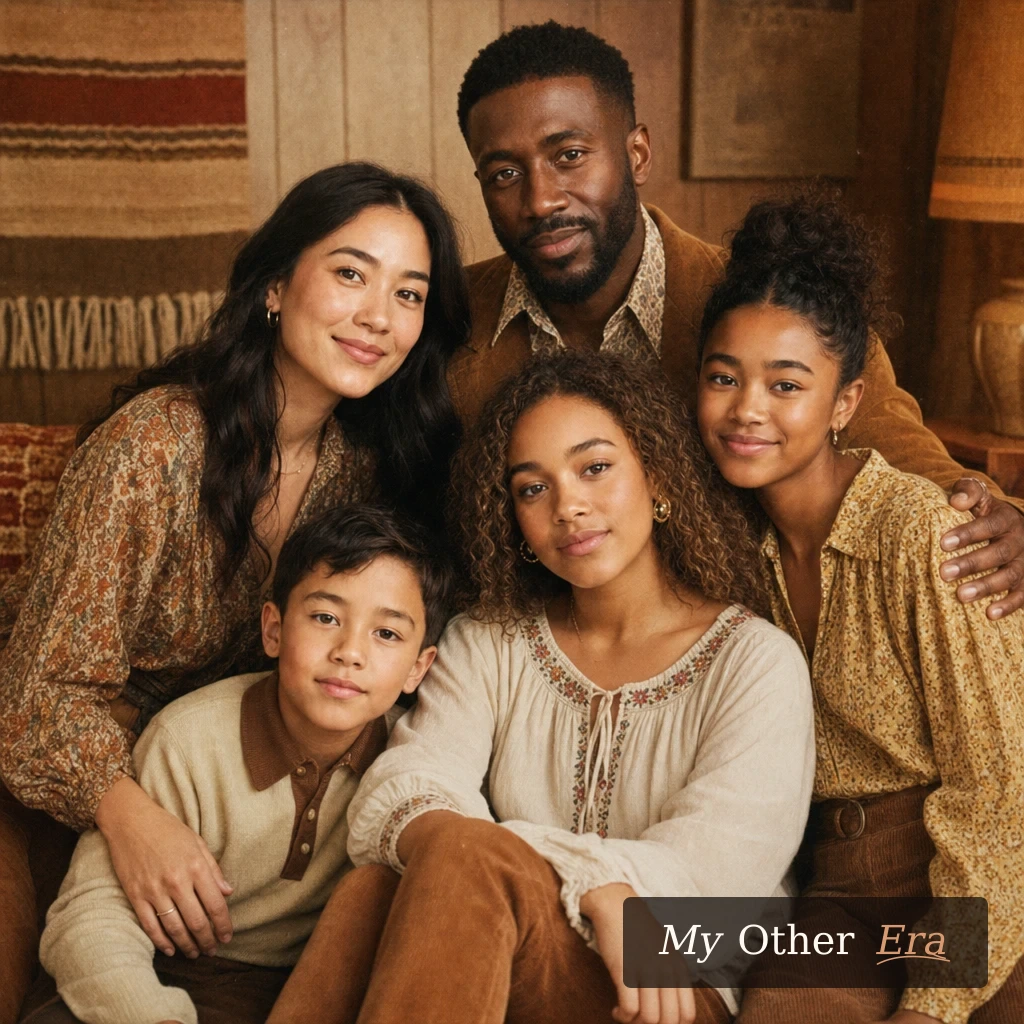
My Other Era’s 1970s option uses a warm, relaxed portrait direction with layered texture and a subtle bohemian influence. It is a creative synthesis rather than a claim about a counterculture, ethnicity, music scene, or real garment.
An original photo with a natural expression and some surrounding space gives the styling room to breathe. Keep the original photo and caption: a generated warm cast is not evidence of a 1970s camera or home.
Related decades
For the sharper youth style before it, read 1960s Mod fashion. For the decade after, compare 1980s New Wave.
Our 1960s versus 1970s guide focuses on practical visual distinctions while acknowledging overlap.
Try the studio
Try a 1970s-inspired portrait
The treatment suggests a broad bohemian influence; it does not assign a culture, music scene, or political identity.
Open the studioRelated reading
Sources and further reading
AI-assisted draft, fact-checked against the sources below and reviewed by the My Other Era editorial team. No individual reviewer is named because no individual reviewer is being claimed.