Reading room / Article
The 1920s and Art Deco Explained
The 1920s brought mass entertainment, new consumer technologies, political change, and the uneasy aftermath of the First World War. Art Deco was an international design movement—not a synonym for the whole decade—and the familiar flapper image represented only some people and occasions.
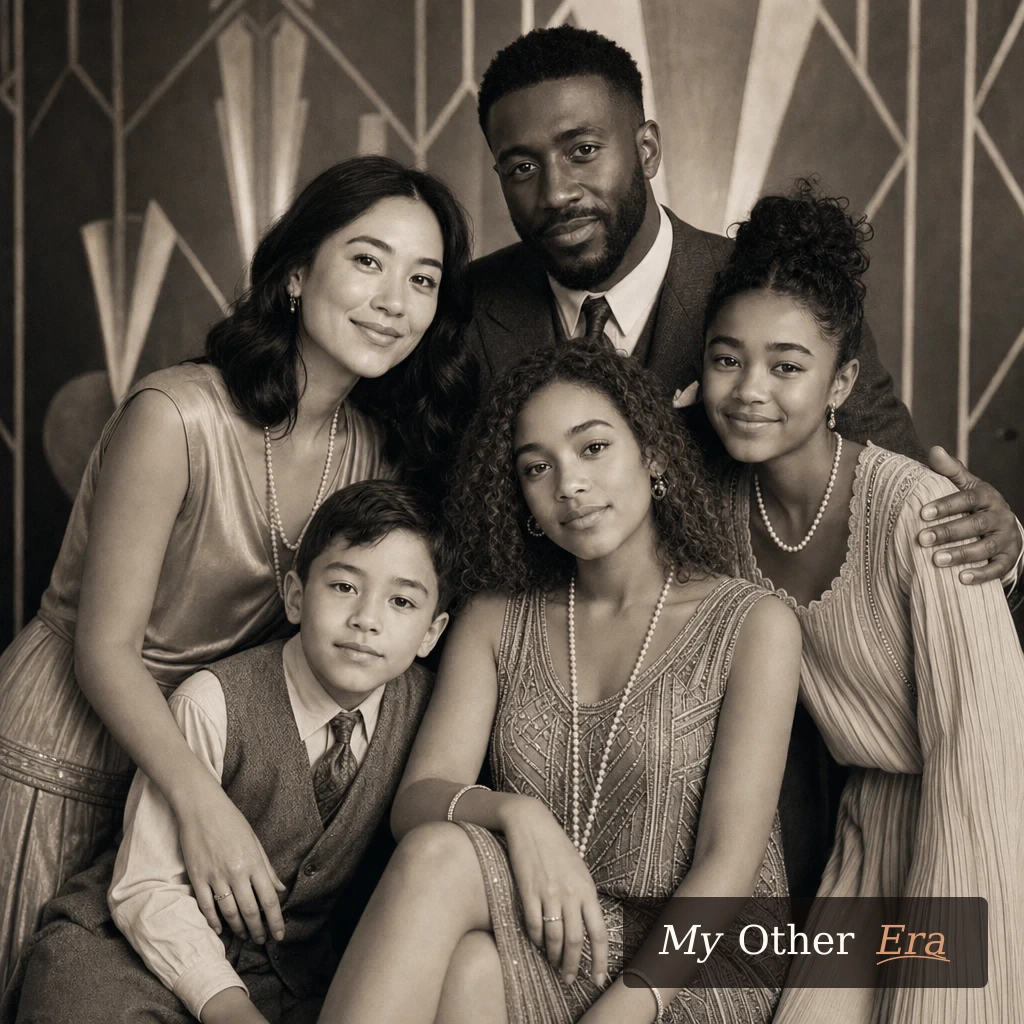
The decade and the movement are different things
The 1920s span 1920–1929. Art Deco developed through design, architecture, fashion, jewellery, interiors, graphics, and industrial objects, with important precedents before 1920 and influence beyond 1929. Its networks crossed Europe, the United States, Latin America, Africa, Asia, and colonial circuits, although power and credit were unevenly distributed.
Radio, cinema, recorded music, automobiles, advertising, and department stores changed how culture circulated. Economic growth in some places coexisted with segregation, colonial rule, labour conflict, migration restrictions, and poverty. The decade was not uniformly modern, liberated, or prosperous.
Dress, hair, and the flapper stereotype
The Metropolitan Museum of Art’s Art Deco overview places the movement across fashion and the decorative arts. Women’s clothing often moved toward a straighter, lower-waisted silhouette, with shorter hemlines than before, dropped waists, sleeveless evening dresses, cloche hats, and geometric decoration. Daywear, sportswear, workwear, regional clothing, and conservative dress remained in use. The bob was influential but never universal.
Men wore suits, knitwear, hats, uniforms, and sports clothes in combinations shaped by place and income. Beading, metallic surfaces, strong geometry, and streamlined motifs can suggest Art Deco, but a photograph’s clothing should not be called Art Deco simply because it is from the 1920s.
Photography becomes more mobile and graphic
Studio portraiture continued, while smaller cameras and photographic magazines encouraged candid and amateur work. Glamour portraits used lighting, retouching, backdrops, and poses to build a modern image; press and advertising photography made the body and product part of a graphic composition.
When reading a 1920s photograph, check the negative or print process, paper and mount, photographer, setting, and provenance. A later scan, colour treatment, or reprint may alter the appearance. A dramatic diagonal or high contrast can be a studio decision rather than evidence of a particular Art Deco building or event.
Whose 1920s?
Women gained voting rights in some countries, Black cultural production flourished in important urban centres, and queer and working-class communities created their own scenes. Those developments were contested and exclusionary laws remained powerful. The decade’s modernity must be discussed alongside racism, colonialism, economic inequality, and violence.
Museums such as the Metropolitan Museum of Art and the Victoria and Albert Museum show the range of objects associated with the period. Their collections are starting points, not permission to turn one elite design vocabulary into a global uniform.
My Other Era’s Art Deco-inspired style
Our 1920s option takes a focused direction: clean geometry, polished eveningwear cues, graphic contrast, and a composed portrait crop. It is an artistic interpretation inspired by Art Deco and adjacent 1920s portrait conventions, not an authenticated 1920s photograph or a promise of historically exact clothing.
An original photo with clear facial detail and room around the shoulders gives the treatment space for a geometric collar, headwear, or backdrop. Keep the output’s AI disclosure when sharing it, especially if viewers might mistake the finish for an archival image.
Keep exploring
For the decade that followed, compare 1920s and 1930s style. For an earlier transition, read the 1910s explained. The links describe overlapping influences rather than rigid visual borders.
Use the era selector when you want a creative portrait treatment; use museum catalogues and family records when you want to identify a real object or date.
Try the studio
Try a 1920s Art Deco-inspired portrait
This creative treatment borrows design cues; it is not a historical authentication or reconstruction.
Open the studioRelated reading
Sources and further reading
AI-assisted draft, fact-checked against the sources below and reviewed by the My Other Era editorial team. No individual reviewer is named because no individual reviewer is being claimed.