Reading room / Article
The 1990s Explained: Nightlife, Fashion, and Portrait Style
The 1990s were not just grunge flannel and low-resolution nostalgia. Globalisation, the end of the Cold War, the web, hip-hop, rave and club cultures, migration, identity politics, and regional conflicts shaped a decade of overlapping styles. This guide places nightlife and grunge in that larger setting.
Dates, geography, and changing media
The 1990s ran from 1990 to 1999. The end of the Cold War, wars and ethnic conflict, global trade, satellite television, and the public web changed politics and culture. Economic opportunity and insecurity varied sharply by country, city, race, class, gender, and access to technology.
Nightlife was shaped by local licensing, music scenes, queer communities, migration, and policing. Grunge emerged from a specific Pacific Northwest music context before being marketed globally. Neither is a universal description of the decade.
Dress and hair were plural
Grunge-associated clothes might include flannel, layered T-shirts, worn denim, boots, and thrifted pieces; club styles ranged from minimal slip dresses and tailoring to rave sportswear, reflective materials, and experimental makeup. Hip-hop, preppy, workwear, goth, and regional styles were also influential.
Hair included long centre parts, short cuts, braids, locs, fades, dyed colour, clips, and deliberately unstyled textures. Fashion media often extracted Black and queer innovations from their communities, so a responsible account names the people and scenes behind trends rather than calling everything “90s.”
The last analogue / first digital portrait decade
35mm film, disposable cameras, photo booths, Polaroids, camcorders, early digital cameras, music television, and desktop image editing overlapped. Direct flash, red-eye, timestamped snapshots, contact sheets, and low-light club photographs became familiar visual signals.
Those signals can be imitated today. To date an original, preserve the negative, print edge, lab markings, metadata, album, and context. An image uploaded from a later scan may have no visible trace of its original capture date.
Nightlife needs a social history
Clubs could offer community and self-invention, but access was controlled by cost, door policy, policing, violence, racism, homophobia, and disability barriers. The AIDS crisis continued to affect communities, activism, and representation. Nostalgia should not turn those realities into a visual filter.
Use oral histories and community archives where possible. A magazine shoot documents a styled production; a disposable-camera image documents a moment from one person’s life. Both are valuable and neither is a complete decade.
My Other Era’s 1990s interpretation
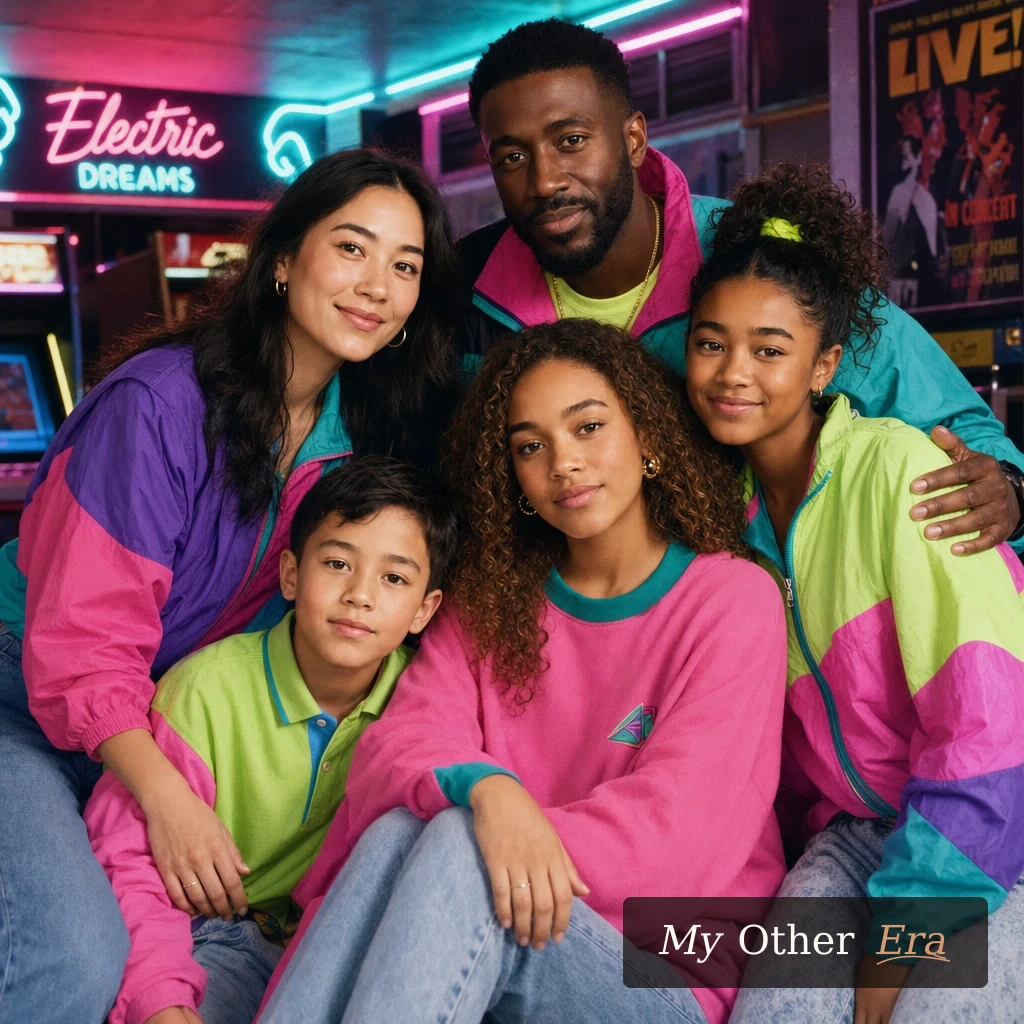
The grunge-90s option is a broad, nightlife-aware portrait direction with tactile layers, candid energy, and controlled low-light influence. It does not claim that a sitter belonged to a band, club, city, or subculture, and it is not a recreated disposable-camera exposure.
An original photo with a clear face and expressive posture supports the treatment. If you want a more specific scene, provide your own meaningful context in the accompanying caption rather than asking an image model to invent it.
Keep reading
For the preceding decade, read restrained 1980s New Wave. For a practical comparison, see 1980s versus 1990s style.
The treatment is a creative starting point; it cannot identify a song, venue, community, or date from a face.
Try the studio
Try a 1990s-inspired portrait
This is a broad creative treatment; it does not assign a club, band, city, scene, or subculture.
Open the studioRelated reading
Sources and further reading
AI-assisted draft, fact-checked against the sources below and reviewed by the My Other Era editorial team. No individual reviewer is named because no individual reviewer is being claimed.